
Winters in the Okanagan can be harsh. When the frost line goes deep, unprotected septic systems are at risk of freezing. A frozen septic line is not only inconvenient—it’s extremely difficult to fix until the ground thaws.
Here is how to winterize your system.
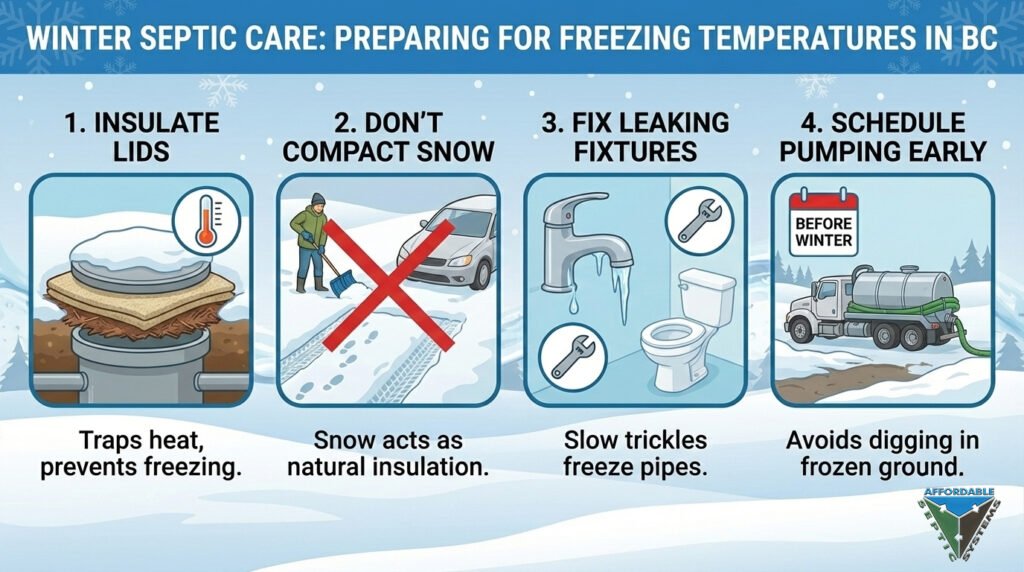
1. Insulate the Lids If your tank lids are exposed or buried shallowly, consider adding a layer of insulation (like styrofoam or a specialized septic blanket) covered by mulch. This traps the heat generated by the bacteria inside the tank.
2. Stop Compacting the Snow Do not drive, park, or shovel snow off your drain field area. Snow actually acts as a natural insulator! Compacting it drives the frost deeper into the ground, which can freeze your pipes.
3. Fix Leaking Fixtures A dripping tap or running toilet sends a slow trickle of water into the pipe. In freezing temperatures, this slow trickle can freeze layer by layer, eventually blocking the pipe completely.
4. Schedule Pumping Before the Snow Falls If your tank is close to full, schedule a pump-out before deep winter hits. It is much harder to locate and dig out tank lids when they are buried under 2 feet of frozen soil.
Stay Warm and Worry-Free Don’t let a septic freeze-up ruin your holidays.